
The world of finance in two minutes. This week:
The Organisation for Economic Co-operation and Development cut its 2026 global growth forecast to 2.8% from its March prediction of 2.9%, representing a sharp slowdown from 2025’s 3.4%. It said the Middle East conflict “has become the dominant force shaping global economic prospects” and is likely to have adverse impacts on growth. While the OECD revised up its 2027 forecast to 3.1% from 3.0% it cautioned that under a “prolonged disruption scenario” growth could slow to 2.1% in 2026 and 1.8% in 2027, potentially pushing some countries into, or close to, recession. Separately, the Eurozone economy shrank 0.2% in the first quarter, following 0.2% growth in Q4, a final estimate showed.
Around the world
Geopolitical tensions have prompted a rebalancing of global central bank reserves, with gold now surpassing US Treasuries as the world’s leading reserve asset, according to a new European Central Bank report. It found that bullion accounted for 27% of official worldwide central bank reserves at the end of 2025, up from 20% a year earlier, while US Treasury holdings fell to 22% from 25%, largely reflecting changing valuations. Meanwhile, euro-denominated reserves remained unchanged at 15%. Increased demand for gold could also reflect some central banks’ efforts to “strengthen balance sheet resilience amid rising geopolitical risks”, the ECB said.
Figure in focus: $40.9 billion
The 2026 World Cup, which begins on Thursday, could add up to $40.9 billion to global GDP, according to reports. The International Federation of Association Football – FIFA – is also said to be forecasting a $30.5 billion economic windfall for the three host nations – the US, Canada and Mexico – alongside the creation of some 824,000 jobs associated with the event. However, analysts warn that the real figures may be more modest than these predictions. Meanwhile the World Economic Forum anticipates the wider sports economy could be worth $8.8 trillion by 2050.
Chart of the week
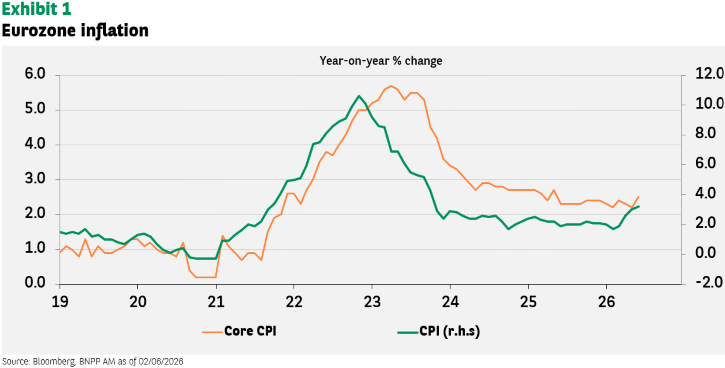
Eurozone annual inflation rose to 3.2% in May, from 3.0% in April, bolstering the case for the ECB to raise interest rates by 25 basis points to 2.25% at its meeting on 10-11 June. It would be the first rate hike in nearly three years. May was the third consecutive month that price growth has exceeded the ECB’s 2% target. Core inflation, excluding energy, food, alcohol and tobacco, rose to 2.5% from 2.2%. European policymakers have in recent weeks prepared the way for an interest rate rise, warning that high oil prices were fuelling inflation.
Words of wisdom
Convertible bonds: Convertible bonds are a hybrid security combining debt and equity elements. They allow investors the option to convert their bond holdings into shares of the issuing company, at a set price. US convertible bond issuance is on track for a record year, according to the Financial Times citing Barclays Research. Companies have issued $57 billion of convertible bonds so far in 2026, and the total for the year is expected to surpass 2025’s record $120 billion. Demand has been driven by soaring artificial intelligence-related stocks, as investors are willing to accept the lower coupons offered by convertible bonds in return for exposure to the sector’s potential growth.
What’s coming up?
On Monday, Japan issues a final estimate of Q1 GDP growth. The US and China each report their latest inflation data on Wednesday, while the Bank of Canada meets to decide interest rates. On Thursday, the ECB convenes for its own monetary policy meeting – in April, it kept interest rates unchanged with the main deposit facility at 2.0%. On Friday, the UK issues its April GDP growth data.


