A combination of shocks stemming from supply and energy disruption, geopolitics, climate change (El Niño recently), rising inflationary expectations and long bond yields, and AI revolution have grappled the world economy. Granted, not all the shocks are negative. The positive AI story is countering the other negatives. The challenge for investors is that the market outlook is defined by shifting narratives and economic data.
These crosscurrents have created unstable expectations, volatile markets and different implications on the equity and fixed income markets and call for a cautious investment stance. Equites are linked to AI, which has been boosting stock prices despite rising long bond yields and oil prices (Exhibit 1). It seems that equity markets are trying to move beyond the Middle East war and its related inflation impact.
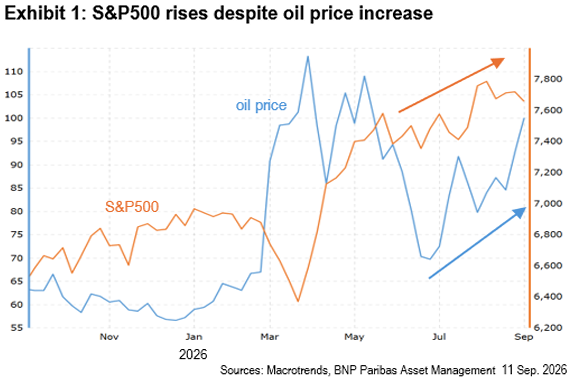
Fixed income is linked to the rest of the negative shocks that are putting this asset class in difficulty. However, equities will struggle if interest rates, bond yields and their volatility pick up further. This is a real near-term risk.
Still benign growth
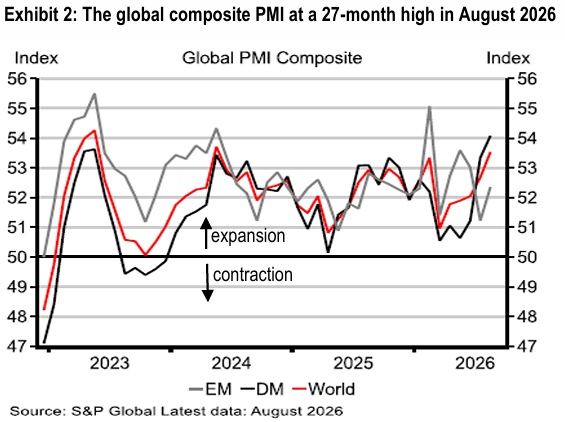
Seven months into the Middle East conflict, there’s still no resolution in sight. Energy prices remain volatile and have risen again. El Niño conditions have intensified, boosting inflationary pressures by pushing up food prices alongside the impact of the recent hot weather and drought in many parts of the world. In the face of these negative shocks, growth has been resilient even in economies that have not seen much of an AI-related boost, with the S&P composite global PMI rising to a 27-month in August 2026 (Exhibit 2).
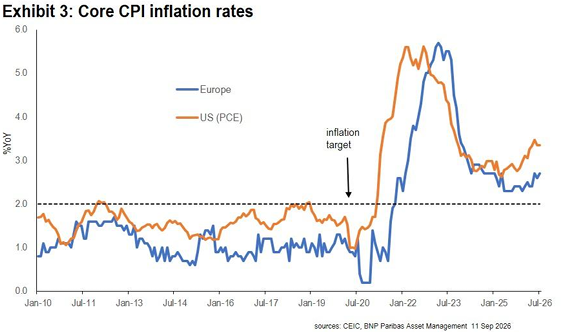
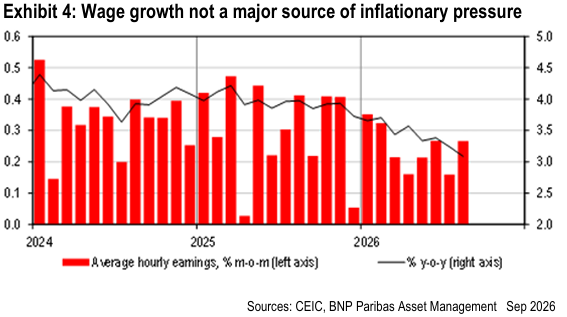
Yes, inflation has remained sticky and above central banks’ target rate of 2% (Exhibit 3), but there are no signs of runaway pressures. Wage growth has even exhibited a slowing trend (Exhibit 4).
The crosscurrents
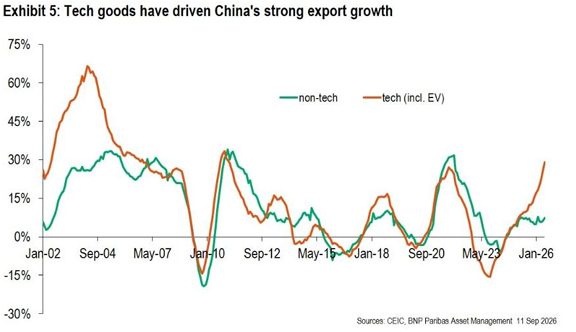
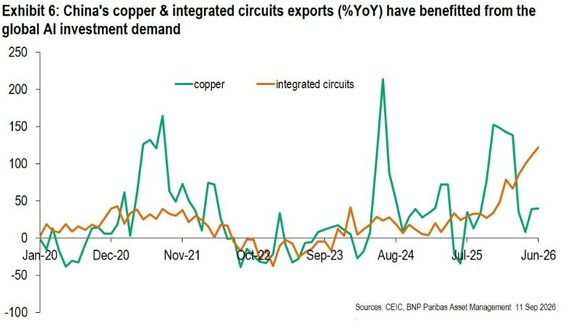
A lot of this resilience is due to the development of AI, with the build out across the world significantly boosting export orders, notably semiconductors in Taiwan and Korea, and imports of AI-enabling goods in the US. AI is also a key part of the story for China, with booming high-tech exports driving Chinese export growth and defying all bearish expectations since the trade war with the US re-started in 2025 (Exhibits 5 and 6).
Sticky inflationary pressures on the back of resilient growth are creating rate-hike expectations. However, it is not that simple. Policymakers around the world must balance conflicting forces stemming from growth resilience, sticky inflation, geopolitical uncertainty, and rising yields. Beyond the AI narrative and its potential boost to productivity, the rest of the global picture is not that encouraging.
Many hyperscalers in the US choose to fund capex with debt from both public and private markets. This adds pressure on borrowing rates at a time when elevated inflation, monetary policy uncertainty, lack of fiscal discipline, and large debt servicing needs are already putting an upward pressure on bond yields. Recurring supply disruptions related to geopolitics, climate-related challenges, and continued trade tensions, are also exacerbating inflationary pressures and risking more rate hikes.
The sum of all shocks
In sum, loose financial conditions, AI investments, and strong earnings momentum still support equities which seem to have taken higher rates in their stride. Everything else is unfavourable for fixed income. Thus, keeping duration short makes sense at this juncture. The dichotomy of a positive equity versus a negative bond backdrop could end if global rates and their volatility pick up further.
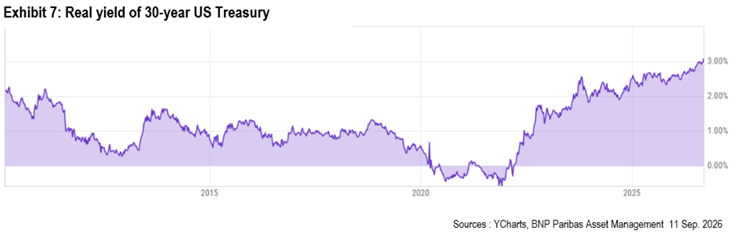
Nevertheless, the current 5.3% yield of 30-year US Treasury bond looks attractive if the Fed manages to pull inflation down to its target. The long-term (10 years) average of real yield for the 30-year US Treasury is about 1.2%. With core CPI inflation running at 2.4% (in August 2026), the current 2.9% real 30-year yield is more than double the 1.2% long-term average (Exhibit 7); thus attractive.
However, the inflation outlook is still uncertain. The Treasury market remains vulnerable to weak sentiment. With inflation risk, the midterm elections, and a new Fed policy reaction function that the market does not understand yet, long yields could move higher before they stabilise.


