
By Syed Haziq Zikri Syed Danial, Head of Sukuk and Portfolio Manager, Emerging Markets Fixed Income, and Fu Yu, Investment Specialist, Emerging Market Fixed Income
Introduction and asset class overview
The sukuk universe has evolved from a niche financing instrument of Islamic finance into a well-established, institutionally recognised fixed income asset class. Total global outstanding sukuk has now crossed $1.1 trillion, spanning 27 currencies, and has surpassed the size of both the European high-yield market and the Swiss bond market.
On the US dollar-denominated side, the asset class has also grown from strength to strength over the years (see Exhibit 1a), reaching outstandings of around $428 billion (see Exhibit 1b) as of end 2025.
Exhibit 1a: The USD sukuk universe has seen remarkable growth over the years
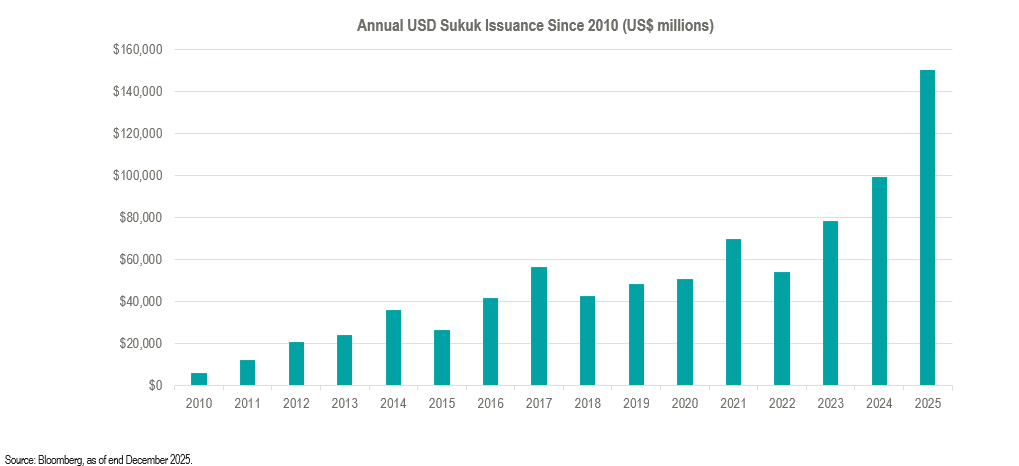
Exhibit 1b: Key characteristics of the USD sukuk universe

What began as a financing tool primarily serving sovereigns in the Gulf Cooperation Council (GCC) and Southeast Asia has broadened considerably. Debut issuers such as the Governments of Philippines and Egypt have entered the market alongside recurring participation from South Africa and numerous financial institutions and development banks.
As a constituent of the broader emerging market (EM) hard currency debt universe, global USD sukuk occupies a distinctive niche: It combines the credit profile of investment-grade EM sovereigns and quasi-sovereigns with the structural discipline of Shariah-compliant issuance, which requires valuation to be based on an underlying asset rather than a pure debt obligation.
Geographically, the asset class is anchored by two complementary regions:
- The GCC, which draws its fundamental strength from hydrocarbon wealth, sovereign wealth fund buffers, and ambitious economic diversification programmes such as Saudi Vision 2030
- Southeast Asia, led by Malaysia and Indonesia, where deep Islamic capital market infrastructure underpins regular and diversified issuance.
By issuer type, sovereigns represent the largest segment of outstanding international sukuk, followed by quasi-sovereign entities and financial institutions, with corporates accounting for the remainder — a composition that skews meaningfully towards high-grade, government-linked credit.
From a credit quality standpoint, the asset class is distinctly investment grade in character. According to Fitch Ratings, approximately 80% of rated sukuk outstandings are investment grade. Crucially, Fitch noted that approximately 88% of sukuk issuers maintain a Stable Outlook, with no defaults or fallen angels recorded through 2025 — a credit record that compares favourably with many conventional EM bond segments and should provide meaningful reassurance to more risk-sensitive institutional investors.
Superior cumulative performance
One of the most compelling arguments for allocating to global USD sukuk lies in its historical return record. As measured by the Dow Jones Sukuk Total Return Index (ex-Reinvestment) — the most widely referenced benchmark for the asset class — the index is designed to track the performance of global Islamic fixed income securities, measuring investment in US dollar-denominated, investment-grade sukuk that have been screened for Shariah compliance.
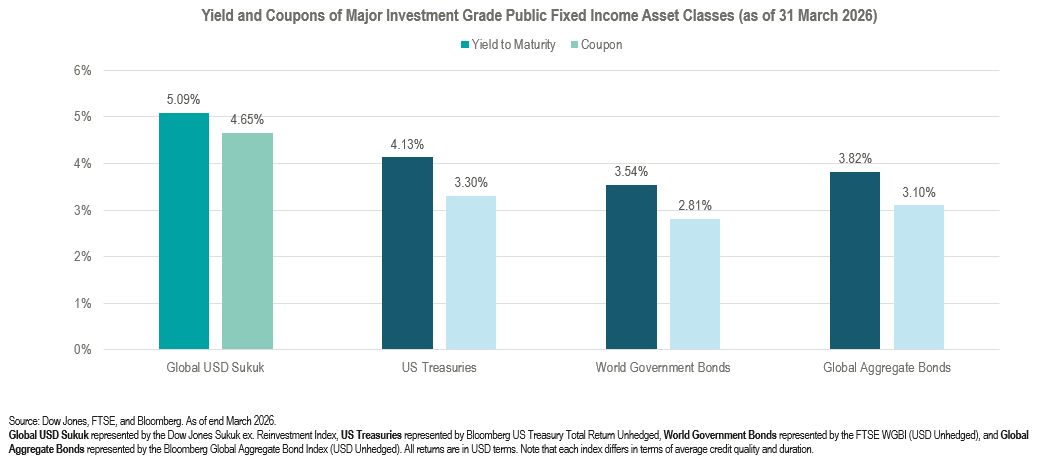
Over the past decade, this index has delivered cumulative total returns that have materially exceeded those of conventional developed market fixed income benchmarks, including US Treasuries, World Government Bonds, and the Bloomberg Global Aggregate (see Exhibit 2a). A critical and consistent factor driving the superior performance is income (yield/coupon), which has also been superior to the aforementioned investment grade peers (see Exhibit 2b).
Exhibit 2a: Compelling returns of USD Sukuk vs. investment-grade peers over time
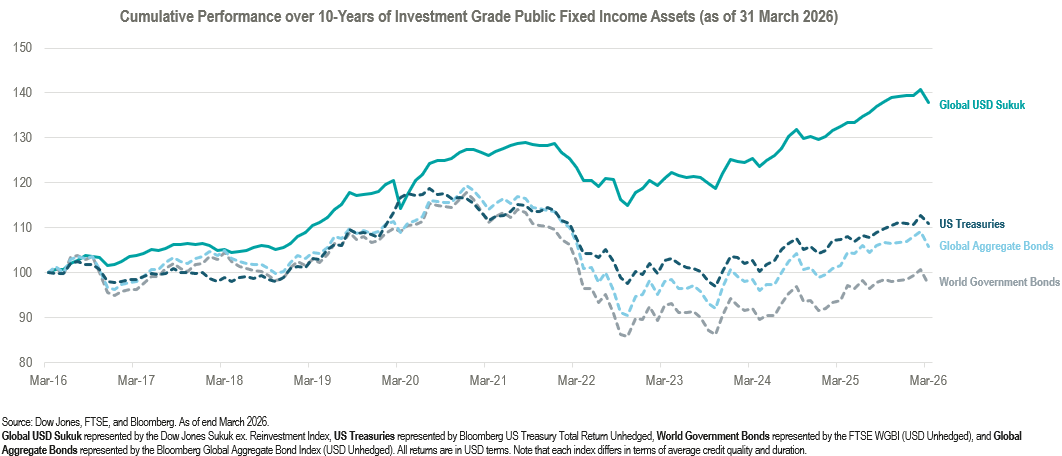
Exhibit 2b: USD Sukuk can offer higher yield and coupons than its investment-grade peers
While US Treasuries were facing sustained headwinds from a prolonged rate tightening cycle — particularly the historic repricing of 2022 and 2023 — and World Government Bond indices were similarly weighed down by negative-yielding developed market debt during much of the 2010s, global USD sukuk benefited from a combination of a structurally higher carry versus US duration benchmarks, and a predominant issuer base with limited exposure to the fiscal vulnerabilities that plagued segments of the broader EM universe.
The spread premium earned by sukuk investors relative to equivalent-duration sovereign benchmarks, combined with the relatively shorter average duration profile of the index versus the Global Aggregate, allowed the asset class to generate a superior income return stream across the cycle.
This performance differential compounded meaningfully over a 10-year horizon, underscoring why global USD sukuk has increasingly attracted attention from fixed income allocators seeking alternatives to low-yielding developed market bonds without assuming the full volatility spectrum of conventional EM debt.
Risk-adjusted performance and Sharpe ratio
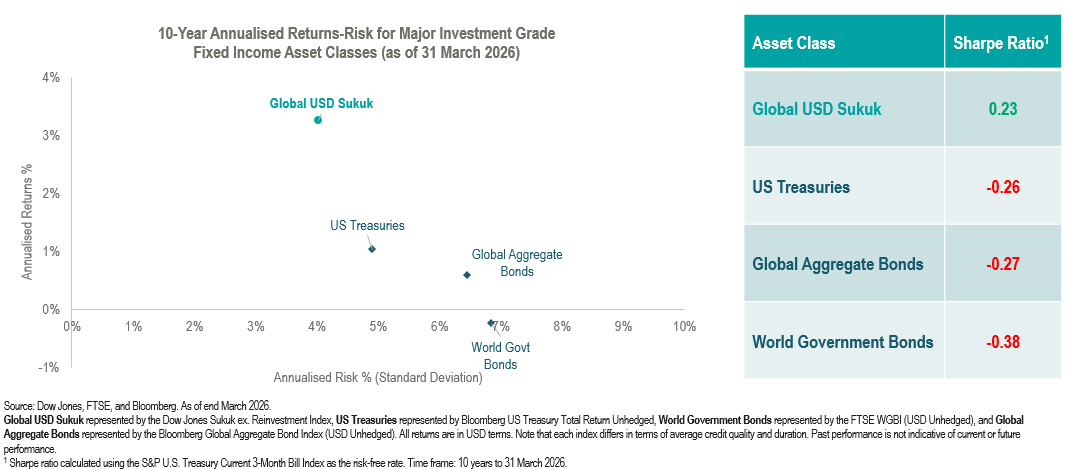
Beyond headline returns, what distinguishes global USD sukuk from a portfolio construction perspective is its risk-adjusted performance profile. The Dow Jones Sukuk Total Return Index (ex-Reinvestment) has consistently delivered a superior Sharpe ratio relative to US Treasuries, World Government Bonds, and the Global Aggregate over the past decade (see Exhibit 3), meaning that investors have been rewarded with more return per unit of risk assumed.
Exhibit 3: USD Sukuk exhibits superior risk-adjusted returns vs. its investment grade peers
This superior efficiency stems from several structural characteristics of the asset class. First, the investment-grade, sovereign and quasi-sovereign credit composition constrains default-driven drawdowns — a material advantage over broader EM debt benchmarks that carry higher-yield, more volatile exposures.
Second, the buy-and-hold behaviour of sukuk investors in the GCC — particularly large Islamic banks — has the effect of dampening mark-to-market volatility, contributing to smoother return profiles and smaller drawdowns relative to benchmark notional duration.
Third, the spread cushion over US Treasuries provides a buffer against rate volatility that pure duration instruments lack. The net effect is an index return stream characterised by relatively low annualised volatility compared to its yield level, a dynamic that elevates the Sharpe ratio relative to lower-yielding, higher-duration developed market benchmarks.
For institutional investors managing against risk budgets or volatility constraints, this efficiency is particularly valuable as it allows meaningful fixed income exposure to be maintained with lower overall portfolio volatility. For broader retail investors, the stability of the asset class can be seen as a useful building block within a broader asset allocation framework.
Diversification benefits and correlation
Global USD sukuk also offers genuine portfolio diversification benefits, deriving from its moderate correlation with conventional fixed income benchmarks and with global equities (see Exhibit 4).
Exhibit 4: USD Sukuk offers moderate correlation with other major public asset classes
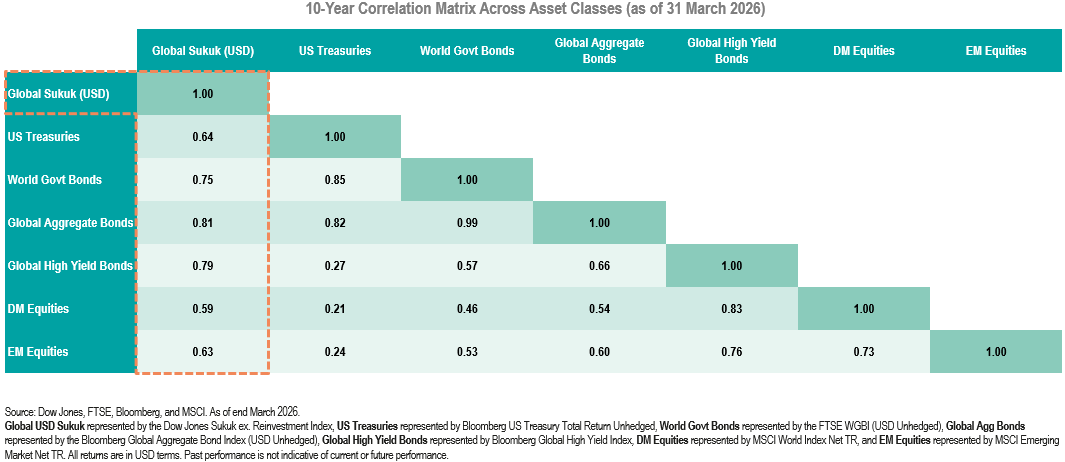
While the asset class shares some sensitivity with broader EM credit spreads — given its hard currency, spread-product nature — its return drivers are sufficiently distinct to reduce co-movement with developed market rate instruments. The moderate correlation also extends to DM-heavy fixed income asset classes like US Treasuries, World Government Bonds and Global Aggregate, and the correlation numbers are further reduced when compared to public equity assets.
This diversification profile means that adding global USD sukuk to a multi-asset or fixed income portfolio can reduce overall portfolio volatility while maintaining or enhancing expected return — the hallmark of a genuinely accretive allocation rather than a purely substitute one.
Conclusion
Global USD sukuk has firmly established itself as a distinctive and attractive allocation within the fixed income universe. With global sukuk issuance reaching record levels in 2025 and foreign currency-denominated issuance exceeding $100 billion — nearly double the volume of just four years prior — the asset class continues to deepen in breadth, liquidity and issuer diversity.
For investors, the proposition is multifaceted:
- An investment-grade universe anchored by fiscally sound sovereign and quasi-sovereign borrowers
- A decade-long track record of superior cumulative returns versus major conventional fixed income benchmarks
- A compelling Sharpe ratio reflecting efficient risk-adjusted performance
- Diversification characteristics that complement both equity-heavy and bond-dominated portfolios.
Sukuk now accounts for a sizeable portion of all emerging market dollar debt issuance, and has gained a market share that reflects growing mainstream institutional acceptance rather than niche demand.
As the global fixed income landscape continues to grapple with fiscal pressures in major developed economies, elevated duration risk, and the search for yield without excessive credit risk, global USD sukuk offers a compelling answer that combines the income characteristics of EM debt with the credit quality discipline and structural resilience of an asset class that has never recorded a default within its investment-grade benchmark constituency.
For investors yet to allocate, the case is increasingly difficult to ignore.


