
Dynamic Allocation. Absolute Flexibility.
With the aim to deliver smoother returns over a market cycle, absolute return bond strategies may provide a much-needed portfolio cushion during periods of heightened market volatility.

2026: Anything
but simple
Despite multiple challenges the global macroeconomic environment remains broadly resilient. However, uncertainty is ever-present and increased volatility has created a challenging climate for fixed income investors – one where bond yields have risen and future monetary policy remains unclear. The fixed income mix is evolving too, with more technology companies issuing bonds to finance their AI infrastructure. These factors are reshaping growth and inflation dynamics, which in turn are impacting fixed income markets. In an era defined by fiscal uncertainty and technological upheaval, we believe the ability to move freely across markets and geographies is not just an advantage, it is a necessity.
A solution for uncertainty
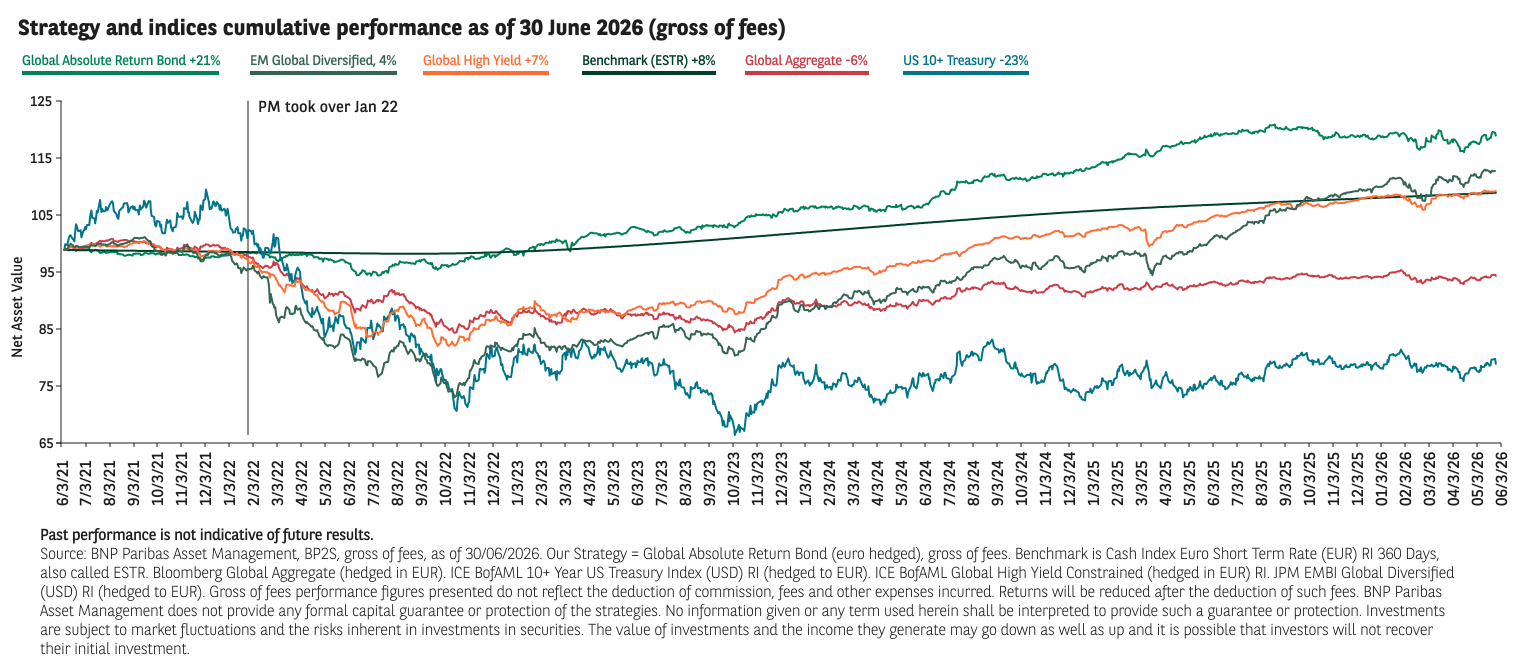
Global Absolute Return Bond seeks to capture attractive risk-adjusted opportunities across global fixed income markets while smoothing the path of returns and avoiding large drawdowns.
1. Flexible global fixed income exposure
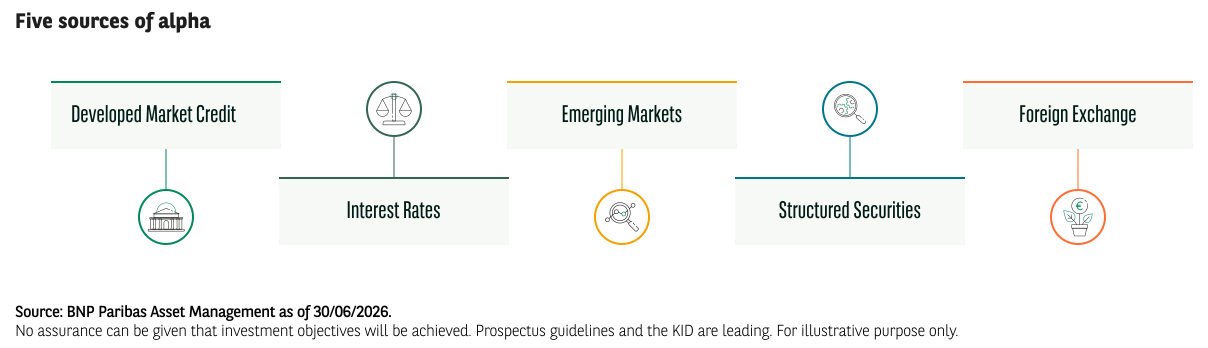
Our global absolute return bond strategy dynamically allocates across five sources of alpha: developed market interest rates, global corporate credit, emerging markets (local and hard currency), structured securities, and currencies (FX). Importantly, investments within sectors are only made where we think we are optimally compensated for taking a given risk. We believe such an approach can help to improve portfolio diversification, limit drawdowns in down markets, and generate positive returns regardless of market conditions.
2. Dynamic approach
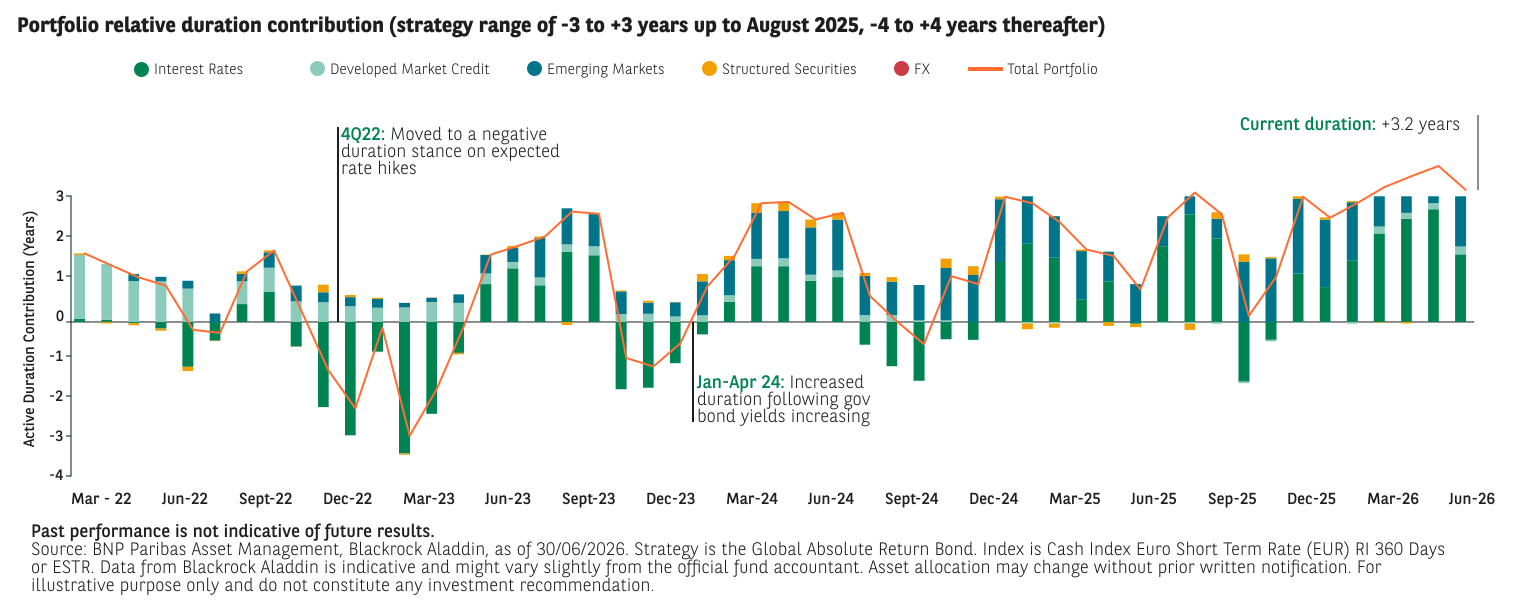
The strategy seeks to outperform cash by 2.5% per annum (gross of fees) and is managed with a benchmark-agnostic dynamic investment style. Portfolio duration operates within a range of -4 to +4 years, allowing investors to benefit from both yields rising as well as falling. Investors can expect the management of portfolio duration to fully utilise this range in accordance with the team’s views.
3. Diversification benefits
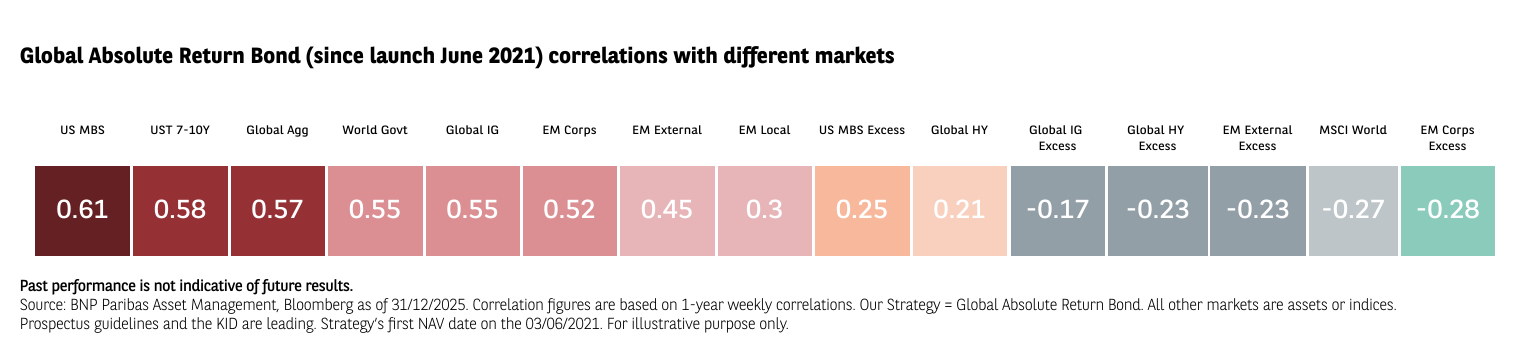
As a result of its flexible approach and ability to invest in relative value positions, the strategy typically delivers low correlations to traditional fixed income segments, for example global high yield. The strategy may, therefore, help to improve the overall risk-return profile of a diversified portfolio.
4. Portfolio construction-focused
The team places considerable emphasis on portfolio construction and works closely with their dedicated front office risk manager. The result is a globally diversified strategy with multiple return streams that seeks to perform well across the team’s base case as well as a range of other market scenarios and preserve capital.
For more information, visit our fund centre.
Meet the team
Our global absolute return bond strategy is actively managed by James McAlevey, Head of Global Aggregate and Absolute Return. Based in London, James has more than 26 years’ investment experience across multi-strategy fixed income and interest rates portfolios.¹
James and the Absolute Return team are part of BNP Paribas’ Global Fixed Income investment group.² They collaborate with the investment group’s various teams to generate the best ideas across an unconstrained multi-sector fixed income universe. They also benefit from access to firmwide resources including our dedicated Sustainability Centre, Quantitative Research Group and Macro Research team.
-
James McAlevey

Head of Global Aggregate and Absolute Return
-
Jayesh Mistry

Senior Portfolio Manager
-
Gaetan Fenerol

Portfolio Manager
-
Jamie Irvine

Portfolio Manager
-
Heyuan Qian

Junior Portfolio Manager
-
Vicky Browne

Investment Specialist, Global Aggregate & Absolute Return
Global Absolute Return Bond
Visit our fund centre to learn more about the strategy
Explore fundCombining perspectives to navigate volatility
Discover how structural shifts are fundamentally reshaping our world
Learn more


[1,2] BNP Paribas Asset Management, as of 31 January 2026
Important information
Marketing communication. For professional investors only.
Past performance or achievement is not indicative of current or future performance. Performance is calculated net of fees unless otherwise stated.
Any views expressed here are those of the author as of the date of publication, based on available information, and subject to change without notice. This material does not constitute investment advice.
Investments are subject to market fluctuations and the risks inherent in investments in securities. The value of investments and the income they generate may go down as well as up and it is possible that investors will not recover their initial investment. There is no guarantee that the performance objective will be achieved.
Environmental, social and governance (ESG) investment risk: The lack of common or harmonised definitions and labels integrating ESG and sustainability criteria at EU level may result in different approaches by managers when setting ESG objectives. This also means that it may be difficult to compare strategies integrating ESG and sustainability criteria to the extent that the selection and weightings applied to select investments may be based on metrics that may share the same name but have different underlying meanings. In evaluating a security based on the ESG and sustainability criteria, the Investment Manager may also use data sources provided by external ESG research providers. Given the evolving nature of ESG, these data sources may for the time being be incomplete, inaccurate or unavailable. Applying responsible business conduct standards in the investment process may lead to the exclusion of securities of certain issuers. Consequently, performance may at times be better or worse than the performance of relatable strategies that do not apply such standards.
The sub-fund may be exposed to other risks defined below.
Capital loss risk: The investments are subject to market fluctuations and the risks inherent in investments in securities. The value of investments and the income they generate may go down as well as up and it is possible that investors will not recover their initial outlay.
Interest rate risk: The value of an investment may be affected by interest rate fluctuations. Interest rates may be influenced by several elements or events, such as monetary policy, the discount rate, inflation, etc.
Credit risk: This is the risk that may derive from the rating downgrade of a bond issuer to which the sub-funds are exposed, which may therefore cause the value of the investments to go down. Sub-funds investing in high-yield bonds present a higher-than-average risk due to the greater fluctuation of their currency or the quality of the issuer.
Liquidity risk: There is a risk that investments made in sub-funds may become illiquid due to an over-restricted market (often reflected by a very broad bid-ask spread or by substantial price movements), or if their rating declines or their economic situation deteriorates.
Derivatives risks: Risks include the lack of secondary market liquidity, valuation risks, the lack of standardisation and regulation, the risk of leverage, the risk of the counterparty.
Counterparty risk: This risk relates to the quality of the counterparty with whom the funds do business or enter into various transactions. This risk reflects the counterparty s ability to honour its commitments (payment, delivery, repayment, etc).
Operational and Custody Risk: Some markets are less regulated than most of the international markets; hence, the services related to custody and liquidation for the subfund on such markets could be more risky
This is not an exhaustive list of risks. For a complete description and definition of risks, please consult a client relationship manager or the global BNP Paribas Asset Management website: www.bnpparibas-am.com.