
By Daniel Morris, Chief Market Strategist
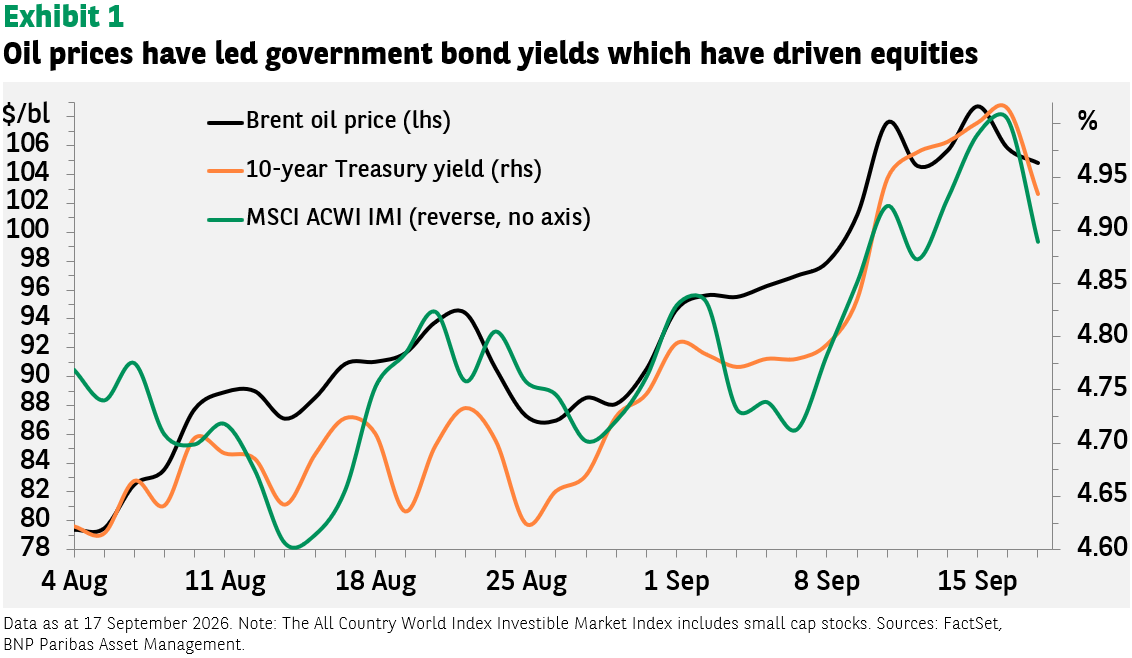
The latest oil price spike has been followed by rising government bond yields globally, which in turn have led to declines in equity markets (see Exhibit 1). While fed funds rate expectations are important, these have already been priced in for the most part.
This is the sixth time oil prices have spiked since the Iran war began, each followed by a period of falling prices (see Exhibit 2). We would expect the pattern to continue in the months ahead.
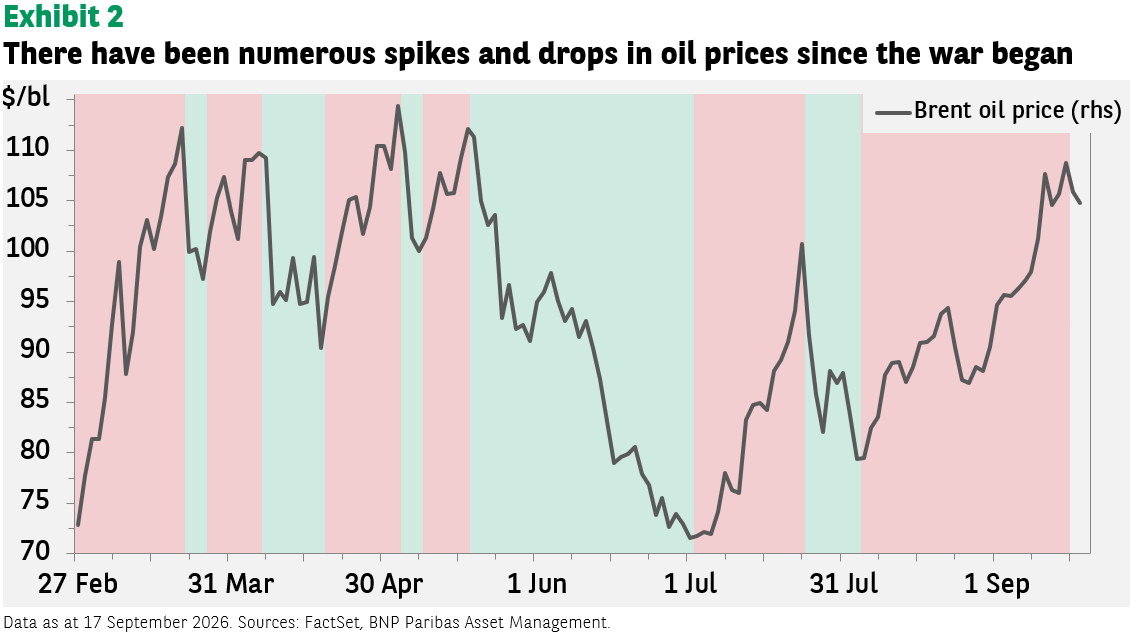
We can examine these episodes to see if the reaction of markets to the current spike is similar to those in the past and to anticipate what may come next.
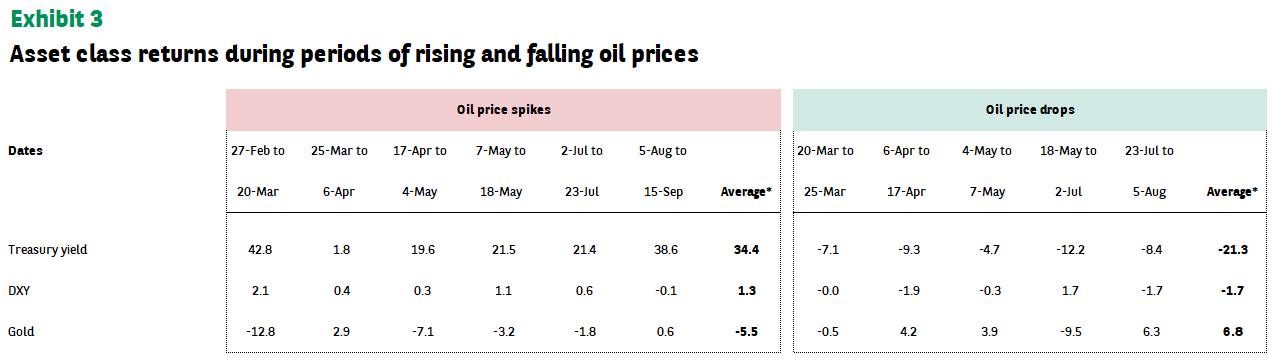
Unsurprisingly, the energy sector outperformed in almost every episode when oil prices rose sharply and it is the only sector which had positive returns on average over all six episodes (see Exhibit 3). Materials also did well as commodities broadly benefited, though returns for the sector were still negative on average.
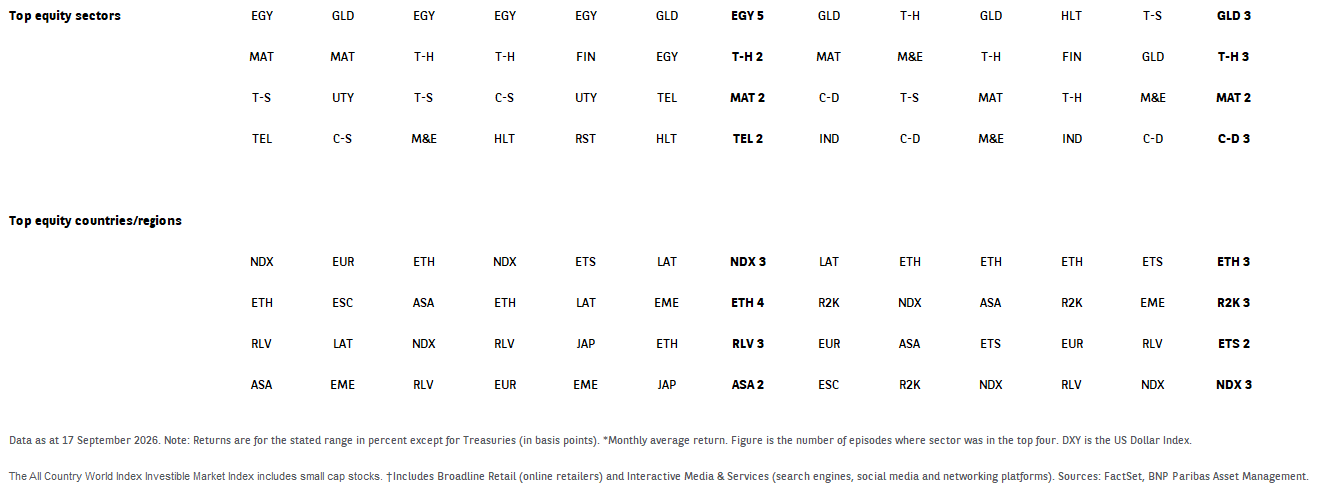
Other defensive sectors that investors might have looked to, such as utilities, did not quite come through: utilities was one of the top four performing sectors in just two episodes. Telecommunication services did somewhat better, ranking fourth.
The second-best performing sector was technology hardware, though it still had negative returns in four of the six episodes. Typically, rising interest rates have a disproportionately negative impact on returns for technology stocks as earnings are expected further out in the future than for other sectors, meaning the increase in the discount rate has a larger effect on the net present value.
Given that so much of the sector’s earnings growth is currently nearer term thanks to the artificial intelligence boom, the impact may have been muted.
A perhaps more important consideration is that the AI theme is now simply so strong that changes in interest rates have only a modest impact on the sector’s returns. Earnings growth is the primary driver.
The risk to the sector is instead anything that threatens the earnings outlook, as recent discussions about the need to “pace the frontier” of AI model development have momentarily done.
The performance of country and regional equity indices largely reflects their sector composition. The Nasdaq, emerging market technology stocks, and the MSCI EM Asia index outperformed most consistently, reflecting the large tech hardware weighting in the index. The other outperformer was the Russell 1000 Value index, which has a large energy sector component.
What goes up will hopefully come down
At some point the current increase in oil prices should reverse. How might investors want to be positioned to take advantage of the anticipated market rebound?
Gold’s negative correlation with interest rates stands out, as the price of gold averaged a near 7% monthly gain when oil prices fell. This was mirrored in the outperformance of gold miners and the materials sector.
Technology hardware ranked again at the top, reinforcing the notion that oil price and interest rate swings are not a key factor in the sector’s performance. This is one reason we remain positive on the long-term build out of AI infrastructure.
The list of the top performing country and regional indices again reflects the underlying sector returns: emerging market technology and Nasdaq re-appear, joined by emerging market software stocks.
The other new edition is the Russell 2000 US small cap index, which remains sensitive to changes in interest rates. Given that the earnings growth outlook for the index is better than for most other major indices, a stable or falling interest rate environment should support returns in the future.
Data sources: Bloomberg, FactSet, BNP Paribas Asset Management as of 17 September 2026 (unless otherwise stated). Past performance should not be seen as a guide to future returns.


